May 13, 2026 | Recent, Uncategorized, Waste Reduction
Jim Newcomer, LOSN Waste Reduction Team, May 4, 2026
When you drop a plastic bottle in your mixed recycling roll cart and drag it out to the street for curbside pickup, does it really get recycled? Or does the hauler just send it to a landfill or ship it off to Asia, where it becomes someone else’s burden? How much of that stuff is actually channeled back into our economy as new products or packaging?
Recently a group of Lake Oswego citizens, organized by LOSN, set out to find the real answer – right here in Clackamas County.
On a Wednesday evening in March, about 20 of us met at Pioneer Materials Recovery Facility (called a MRF for short) in Clackamas,Oregon. The dedicated employees process the contents of curbside co-mingled recycling bins from Portland and, in fact, from many towns in Oregon. Separating items by source material is critical to sending them to the customers for reuse/recycle.
The tour idea originated with our LOSN Waste Reduction Team; and we invited the Program Manager for Metro’s Master Recycler program, Stacy Ludington and Sara Stith, the new Sustainability Program Manager for Lake Oswego, to join us.
We carpooled from LO to the facility in Clackamas. Stacy provided the headsets used by Master Recycler trainees for us to use so that we could hear our guide in the materials processing area. Once everyone was outfitted with the headsets and other safety gear, we stepped inside the building and into a meeting room for a brief overview of the company from our tour guide, Mike Smith, the Warehouse Manager for this facility. Pioneer started as a local company operating in Tacoma and Portland. In 2024, it became a subsidiary of a national conglomerate called Waste Connections, Inc. With that merger came the capital funding to upgrade equipment to process larger quantities of material to a higher purity.
Mike explained that Pioneer receives all the mixed recycling that is picked up curbside by trash haulers in Portland and many other local jurisdictions, although not Lake Oswego. The new extended producer responsibility law that recently took effect requires all towns in Oregon to recycle the same materials, and so Pioneer processes recycled goods trucked in from as far away as Baker City and Ashland.
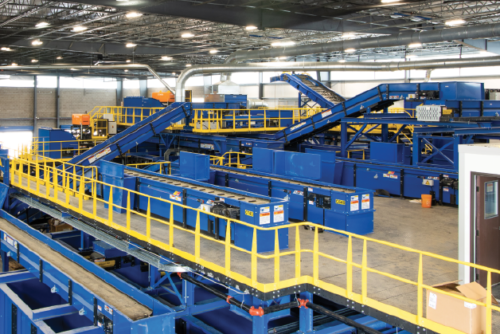
At the beginning of the process, the mixed materials are tipped onto an angled conveyor belt and transported upwards to mechanical fingers that separate the high value OCC cardboard first. Another conveyor on the next level is crowded with workers who stand by the fast-moving belt picking out by hand the material that cannot be recycled here, such as plastic grocery bags, and watching the main stream flow over the end and drop onto the next belt, where others, still picking by hand, begin sorting the plastics from the paper, and then on to the next stages where they use mechanical and visual sorting methods to further separate materials by composition (metal, plastic, paper).
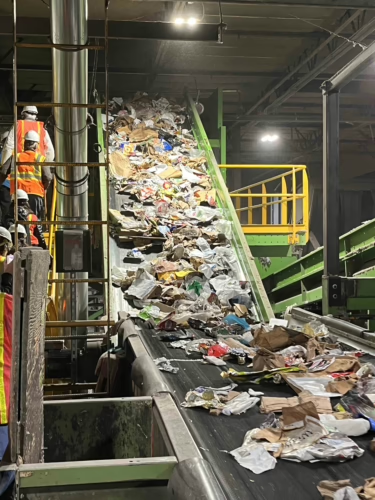
If anything, the noise intensified. Blowers were blowing the lighter materials up, grids with holes of various sizes were letting smaller pieces or cans fall through, and magnets were picking out the steel cans and chunks to separate them from aluminum and other non-ferrous metals. At one point a single one-armed robot was identifying and snatching small pieces that the operators had missed on the fast-moving conveyor belt.
Once the individual materials are separated (paper, cardboard, tin cans, plastic milk jugs, colored detergent bottles, etc.), they further refine the separated materials to remove the small pieces of foreign material that would contaminate a shipment. Finally, the separated materials are baled into six-foot cubes that weigh up to a ton apiece, and these are shipped to paper mills, steel plants, and plastic recycling facilities all over the country.
Pioneer prides itself in achieving a high degree of purity of the material for one main reason: the price they can command for it depends on the purity of their product. The accuracy of sorting is the heart of the operation. High purity equals higher prices; low purity, low prices. The market is a relentless disciplinarian, and Pioneer claims that their product maintains the highest purity in the business.
After touring the process up close, climbing up steel ladders, walking across catwalks, listening to explanations from our tour guide as we stood high up on platforms, and finally emerging on the plant floor, we went outside and gazed up at the bales of cardboard, plastics, steel cans, aluminum cans, and paper, all ready to ship out. With the background noise now at a minimum, our tour guide, Mike Smith, the Warehouse Manager offered us an impromptu Q & A session.
A few key learnings:
- Do you pay the trash haulers for the material they bring you? Answer: No
- How much of your end products do you ship overseas Answer: None – By Law!
- Are you able to sell all your products to recycling plants (Answer: Yes.)
The good news is that every scrap of the recyclable materials (those allowed in our curbside co-mingled recycling bins) is recycled; nothing is landfilled except the contaminants they pick out of the stream, roughly 5% of their intake. Tour participant Sara Hammons commented about the tour “I found it interesting that the materials get run through the facility multiple times if needed until they get to their proper place or are confirmed garbage.”
Surprisingly (for us, at least) the company pays their employees well, provides health care, paid vacations, time off, and other benefits, such as support for higher education of both employees and their family members. As a result, there is low employee turnover. We were impressed by the enthusiasm for their work that we experienced from everyone we met at Pioneer.
As Oregon’s new recycling law, the Extended Producers Responsibility Act, takes effect, funding will be provided to Pioneer and other MRF’s to use to enhance their existing equipment, including robots and AI technology. They will automate some of their picking lines even further, and they will increase their capacity to handle even greater incoming loads.
So in answer to our original question: Does your curbside recycling really get recycled?
You bet it does. Pioneer is banking on it.
May 13, 2026 | Recent, Schools, Waste Reduction
By Jirapa Wongwanich, LOSN Schools & Waste Reduction Action Teams
What began as a simple trash bin observation has grown into a collaborative sustainability effort connecting students, teachers, families, staff and community organizations across multiple schools in the Lake Oswego School District.
In March 2025, while volunteering at Palisades World Language School, I noticed how much food waste was ending up in trash bins each day. Like many families in our community, I had started separating food waste at home after learning about the city’s curbside composting program. The question naturally emerged: could students separate their lunch food scraps too?
That same evening, I attended a sustainability gathering co-hosted by Lake Oswego Sustainability Network and Lake Oswego School District, where a county representative shared how Clackamas County supports schools in managing their waste. Inspired by the presentation, I reached out to the Palisades Green Team leaders to explore whether lunch waste separation might be possible at our school.
We decided to begin with a simple Earth Day activity involving a limited number of classes. We created a short presentation to teach students about food waste, composting and a simple sorting process designed to minimize confusion and contamination:
- Only food goes into the compost bin,
- Leftover milk goes into the liquid bin,
- Unopened or uneaten food goes into the food-share bin.
Clackamas County provided bins and helped conduct a food waste audit, while teachers and volunteers guided students through the process. The kitchen staff also provided recommendations and support with cleanup and logistics. The response from students, teachers and staff was immediate and encouraging.

Soon after, I joined the Lake Oswego Sustainability Network Schools Action Team, where I met people who shared the same passion for sustainability and environmental education. That sense of community empowered and inspired us to do more for younger generations. LOSN created space for ideas, partnerships, and encouragement, showing how community collaboration can turn small ideas into meaningful change.
Earlier this year, the Lake Oswego High School Green Team invited the LOSN Schools Action Team to discuss lunch composting efforts at the high school campus. Seeing students genuinely passionate about food waste reduction and environmental responsibility energized both groups and inspired a broader vision: expanding lunch waste separation programs throughout the district.
As planning continued, support grew across the district, including collaboration with LOSD Nutrition Services, Facility Operations and Communications teams. Elementary schools began exploring how programs could work within their own campuses and routines.
Three schools, River Grove Elementary School, Lake Grove Elementary School and Palisades World Language School successfully expanded or launched school-wide lunch waste separation programs with support from Lake Oswego Sustainability Network.
Each school approached the work differently based on its own strengths and logistical challenges. Schools without cafeterias, such as Palisades and Lake Grove, needed creative solutions for setting up sorting stations in hallways and transporting collected waste outdoors. River Grove, the school with a cafeteria, had to manage a larger student population and faced higher risks of contamination. Lake Grove already had passionate teachers leading advanced food waste separation efforts with younger grades. River Grove benefited from an enthusiastic 5th grade leadership team and a supportive lead teacher, while Palisades relied on strong collaboration among teachers, staff and parent volunteers.
LOSN played a key role in connecting schools, volunteers, students and community partners by facilitating communication, sharing knowledge and helping turn ideas into action. Clackamas County continued supporting the schools by providing rolling bins, supplies and food waste audits. Teachers organized student helpers, school cooks and building engineers helped manage daily setup and supported logistics, and parent volunteers assisted with training and supervision. Members of the Lake Oswego High School Green Team visited elementary schools to guide younger students through the sorting process, creating meaningful peer-to-peer learning experiences. Many 5th grade students eagerly stepped into leadership roles, helping younger students sort waste correctly and building excitement around sustainability.
Across all three schools, one key factor stood out: collaboration. The success of these programs was not the result of one person or one group, but of an entire community working together: students, teachers, custodians, nutrition staff, administrators, volunteers, county partners and LOSN𐆑all contributing in different ways.
This growing effort is a reminder that meaningful change often begins with small, local actions and that students are ready and eager to make a positive impact on the environment. When schools, families and communities come together around a shared purpose, even a simple lunch routine can become an opportunity to teach leadership, environmental stewardship and collective responsibility for the future.
We hope this program will continue to grow, become institutionalized within the district and expand to more schools in the coming years. With continued collaboration among students, staff, families, community partners and district leadership, this effort has the potential to become a lasting part of school culture and sustainability education across the district.
Mar 17, 2025 | Community, Education, News
On July 1 of this year, Oregon will become the first state in the U.S. to launch a new recycling plan that will:
- expand the number of things most of us can recycle,
- provide residential recycling pickup service to city and rural customers in all parts of the state,
- require owners and managers of multi-unit housing to provide recycling for residents,
- improve public education about recycling,
- require certification of recycling operations to verify that their products are really being recycled,
- enable upgrades to the facilities that process recycled materials, and
- require producers of plastic and paper products to form a Producer Cooperative through which they will pay part of the cost of recycling, enough to provide funding to enable recycling facilities to upgrade equipment and make up for fluctuations in market prices,
- spur changes in packaging as manufacturers discover that making packaging easy to recycle saves them money.
For collectors, materials recycling facilities, final processors and especially manufacturers of plastic packaging and tableware, that means quite a change is coming. This bill will require manufacturers to share the cost of recycling plastics and paper products as well as help support and stabilize the recycling markets.
In 2021, the Oregon Legislature passed the law that created this change (SB 582), officially named the Plastic Pollution and Recycling Modernization Act. Oregon was the first state that addressed the issue. Since then, four others have signed packaging Extender Producer Responsibility (EPR) bills into law—Maine, Colorado, California and Minnesota. The law required the Department of Environmental Quality (DEQ) to draft rules to implement it by 2024. DEQ met that deadline, and since then it has been soliciting comments from the participants to ensure that the rules would be practical and that the companies affected by the bill would be able to comply.
Now DEQ has set the date when the new law will take effect: July 1, 2025.
In compliance with the new law, manufacturers that produce $5 million or more worth of paper, packaging and food serviceware have formed their Producer Responsibility Organization in Oregon called the CAA. Manufacturers will pay into the CAA, which will distribute the funds to the Materials Recovery Facilities and end recyclers to pay for upgrades to their equipment, which they will need to ensure the material they sell back to recycling process plants is clean, uniform and free of dirt, grease or food particles that would contaminate it and prevent recycling.
To understand how important this new system is, it helps to trace the path of the things we place in our curbside bins through their journey to becoming new products. Republic Services picks up our bins from the cans we place in front of our homes and takes the contents to a recovery facility (MRF) on Swan Island run by a company called EFI. EFI buys the mixed material that we put in our cans from Republic, separates them into newsprint, office paper, corrugated cardboard (OCC), milk and soup boxes, glass bottles, plastic bottles and batteries.
Once the items are separated, EFI sells each material to a different recycling plant, such as a local cardboard mill, the mixer that breaks down milk cartons or the big plastic pellet manufacturers in the midwest and east coast. At each of those buy-sell points, prices vary according to several factors, among them the cleanliness of the goods, supply and demand for them and uniformity over a group of loads.
Oregon’s new law will boost recycling work around the state by ensuring that separation facilities like EFI and Pioneer, who buy the recycled material we place in our cans, can sell their separated products on the market, regardless of price fluctuations. Under the new law and with their new equipment, separation yards such as EFI and Pioneer will be able to meet the standards of their customers, who often refuse shipments of separated materials because they are too dirty to process or don’t meet other specifications.
Summary of the Law
The act requires producers with annual sales of $5 million or more to form a Producer Responsibility Organization (PRO) that will fund improvements to the system and ensure the recyclables that are collected go to responsible end markets.
The producer responsibility organization (the CAA in Oregon) will use producer membership fees to ensure better and expanded recycling services. It will also fund waste prevention grants and studies to assess challenges and recommend solutions to improve recycling in condos and apartment complexes, equity in the recycling system, as well as clean up litter and marine debris.
The State of Oregon will establish one statewide list of what can be recycled by the franchised garbage haulers like Republic so that individuals and businesses can recycle the same items everywhere in the state.
Local governments, especially in rural areas, will expand their recycling services with direction and support from the PRO, and cities will do the same for people living in apartments and condos. The same private collection companies (i.e., garbage haulers) will continue to provide curbside pickup for recycling in cities where they already do that – including in Lake Oswego.
PRO(s) will create accessible educational resources that local governments can use to discourage contamination and encourage recycling
Processing of recyclable materials will be done in facilities that meet new performance standards, including material quality, reporting and paying living wages to facility workers. These facilities will be required to obtain permits from DEQ or meet similar standards before they can receive recyclable material from Oregon communities.
End markets that can handle the material appropriately – without creating plastic pollution – can purchase the materials that these facilities process and recycle them into new products. Producers will be obligated to make sure materials collected in Oregon reach responsible end markets.
Oversight and Integration
A new governor-appointed advisory council will provide feedback to DEQ and the PRO(s) about important elements of this new recycling system, including the statewide collection list. DEQ will oversee the recycling system and provide enforcement where necessary. The PRO(s), processors and local governments will track and report more and better information about where our recyclables go and provide assurance that they are used to make new products.
Mar 13, 2025 | Community, Education, News
By Susan Mead, LOSN Volunteer
The Lake Oswego garbage, recycling and yard debris with food waste rates have increased as of February 2025. The new rates are available to review at the city’s website: https://www.ci.oswego.or.us/recycle/garbage
There are several ways you can lower your monthly cost and take advantage of free services:
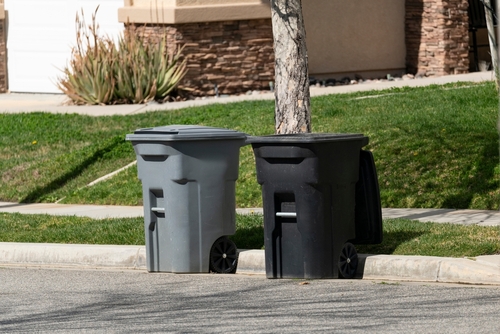
- If you have weekly service for a 65-gallon or 90-gallon trash roll cart and do not fill it more than half full every week.
SOLUTION: Consider going to a smaller roll cart from what you currently have. A 35-gallon trash roll cart service is almost 50% cheaper than the two largest sizes.
- If you have weekly service for the smallest roll cart (35-gallon) and usually don’t fill it.
SOLUTION: There are two great options if you already have the smallest roll cart. Consider getting a plastic insert in your 35-gallon roll cart to qualify for 20-gallon weekly trash pick-up, saving you 25% over your current bill. Alternatively, you can switch to a pick up of the 35-gallon roll cart once every 4 weeks, saving you over 40% compared to weekly pickup.
- You want to keep weekly service at your current roll-cart size because you put food waste in your yard debris bin and it gets too dirty/stinky.
SOLUTION: Did you know that Republic Services will swap out your yard debris roll cart once a year for free? Additional cleanings are available for a fee, but that fee may be less than you pay monthly for the larger trash roll cart.
- If you travel more than three weeks at a time you can put your trash service on hold for a vacation credit while you are away.
SOLUTION: As long as you reach out to Republic Services ahead of your next service date and inform them of the weeks that you will not need services. You can put your trash/recycling service on hold and receive a vacation credit for the period you are skipping service if you are requesting it for at least three weeks in a row, up to 4 times in a calendar year. Note: Vacation credits will not be applied to Multi-family or Commercial customers.
In any of the scenarios above, the frequency of service and size of the recycling and mixed yard waste roll-carts do not change. Even if you cut your trash service to monthly, the other carts will still be picked up weekly.
- If you need to keep your current size of trash roll cart because so much plastic is not recyclable in the curbside bin. Are there any options for this waste?
SOLUTION: In fact, there are places to take those non-curbside plastics both in Lake Oswego and in nearby jurisdictions. One recently opened location you can bring non-curbside plastics is the James Recycling Depot, located on Beaverton-Hillsdale Highway. Hours are limited, but they do open one Saturday every month. You can drop off clear plastic bags at nearly every supermarket, as well as clear plastic to-go containers (#1 PET) at any New Seasons location.
Finally, how do you make any of the changes suggested here? You can call Republic Services at 503-636-3011 or 844-737-8254 and request any changes you would like. Please note that the phone customer service hours are 7:30 AM – 5:30 PM Pacific Time Monday through Friday.
Jun 16, 2024 | News, Recent
The fingerprints of climate change are becoming more pronounced. As prolonged heat and drought become part of the normal rhythms of the season, how do we take care of our trees? Unprecedented temperatures and seasons of drought can be extremely hard on trees, especially landscape trees in our urban forest. If they are not well-watered, harsh temperatures make trees more susceptible to insects and disease. Extended periods of drought can cause stress in both newly planted and mature, well-established trees.
Here are some tips collected from the City of Lake Oswego, Friends of Trees, and Portland Parks & Recreation to help you shift into summer plant care mode and help your landscapes handle and recover from spans of extreme heat.
Drought Stress
- Plants that are subjected to water stress drastically decrease their resistance to opportunistic pathogens and insect invasions.
- Research your trees! Some species are more drought sensitive than others and require specific cultural requirements for watering, soil quality and climate.
- When monitoring drought stress, City of Lake Oswego advises you to be on the lookout for sparse canopy, wilting foliage, yellowing leaves, premature fall coloration, or leaf drop.
Soil
- Soil quality and type has a large impact on how successful a watering method is.
- Observe your soil. How quickly does it dry out after rain or watering? Dry soil can cause tree roots to die and reduce a tree’s ability to absorb water when it does finally rain.
- Sandy soils need shorter watering intervals because water drains quickly. Clay and less porous soils should have longer watering intervals.
- Soil moisture should be checked by hand! Portland Parks & Rec suggests an easy way to test soil is to stick a long screwdriver at least 12 inches into ground below your tree and see how much resistance from the soil you receive. If you receive a lot of resistance, the tree needs more water. If there is mud sticking to the end of the screwdriver when you pull it up, the water has properly seeped into the root zone.
- Friends of Trees suggests mulching trees with 3-4 inches of organic mulch (woodchips, compost) to reduce soil evaporation and maintain a consistent soil temperature. Remember the root zone is as big as the tree’s canopy so you need to mulch a large area not just at the base of the tree.
General Watering Tips
- Water trees in the early morning or late evening to minimize evaporation.
- Irrigate slowly so water percolates deep into the soil and root zone. This video by Friends of Trees demonstrates an effective, slow-drip watering system using a five-gallon drilled bucket.
- Other effective drip irrigation systems include ooze tubes and soaker hoses
- When using hoses, make sure to move around different areas under the tree.
- Try not to water too much! Davey Trees has a helpful article about decoding your trees’ clues that they’re being overwatered.
Tips for Watering Young Trees
- Because most of the Pacific Northwest’s precipitation occurs in winter and early spring months, nature is not watering the young trees when they’re experiencing the most growth.
- Newly planted trees should be watered about 10 to 15 gallons of water each week in their first three summers after planting with an extra 15 gallons during dry spells.
- It’s best to water infrequently, once or twice a week during long heat waves,
- Irrigate slowly and deeply to encourage roots to grow deeper.
- To encourage roots to grow outwards, avoid watering a young tree too close to its trunk and stick to watering over the root zone between the trunk and the edge of its leafy canopy (dripline). This will expand the young tree’s drip line over the coming years.
- This helpful video module by Friends of Trees demonstrates three different watering methods for young trees:
-
- You can purchase 15-20 gallon watering bags at a nursery to place around young trees. Fill once a week, or twice during heat waves.
- Drill three small holes a half inch apart into the base of a 5 gallon bucket. Fill three times during the course of the day and rotate it around the tree’s root zone.
- Place a trickling hose in the root zone for 15-30 minutes once a week.
Tips for Watering Mature Trees
- This video by the US Forest Service recommends watering mature trees once or twice a month slowly and deeply to keep them happy during dry months.
- Circle a soaker hose around the outer edge, or drip line, of the tree canopy. This is where water naturally drips off the tree canopy when it rains.
- Don’t water your mature tree at the base of the trunk. Too much water will rot the roots.
- Turn on your soaker hose in the early morning or late evening and let the water seep in for at least one hour.
May 30, 2024 | News
Become an Electrification Coach with the Lake Oswego Sustainability Network (LOSN)
Consumers around Oregon are interested in electrification, but it’s complicated. They may want to weatherize their homes, install solar panels, heat pumps, and batteries, or buy an EV. It can hard to decide how to prioritize, how to find contractors or how to find incentives. As an Electrification Coach, you will offer independent advice without a financial incentive.
Becoming an Electrification Coach is a great way to get involved!
How do I sign up to become a coach ?
Electrify Oregon, a statewide electrification group, is working with community organizations throughout the state to offer a coaching program. If you are interested in becoming an electrification coach, there are two steps:
- Register for training. The next class is October 22 – November 14, and it’s filling up fast!
- Send your name and address to LOSN Board Member Lisa Adatto so you can be connecteed to the program in Oregon.
What kind of training will I receive?
All of the training will be virtual. You will go through a month-long program offered by Rewiring America, taught by some of the best experts in the US. You will meet fellow coaching students from around the country. It has the following components:
- Four comprehensive 90-minute Zoom classes, available in real time, or at your convenience, about weatherization, electrification products like induction stoves, heat pumps, batteries and more, EV’s, financial programs, and how to coach
- Coaching tools including the Personal Electrification Plan (PEP), the opportunity to roleplay, and details about IRA and other financial resources
- A workbook for each class
- Videos and written material covering all aspects of electrification
- Quizzes to test your knowledge and identify any misunderstandings
- Homework including your first coaching session and creating a resource handbook
- Access to experts who work with you one-on-one
- Ongoing access to the Rewiring online community for coaches
You will also attend one Zoom workshop hosted by Electrify Oregon to orient you to the logistics, support services and expectations for coaches who participate in the Oregon program. If you are drawn to one particular area of interest (like heat pumps or solar panels), we will encourage you to get extra training and become a subject expert.
What is expected of me as a coach for Electrify Oregon?
- Once trained, we expect that you will put in five to ten hours a month coaching clients.
- You will receive names of clients from Electrify Oregon or from your local community electrification organization that participates in Electrify Oregon.
- You will be track your coaching sessions and your answers to client questions on the Electrify Oregon online system.
- You will be invited to attend a monthly zoom coaching meeting during which we will look at particular cases and discuss best practices.
- If you become a subject expert you may be coaching people from around the state. Other coaches may refer people to you.
- You will have latitude in your approach to coaching. Many coaches work by zoom or by text or phone. You may also choose to meet people in-person at local events, coffee shops or their homes.
- If there is interest, we may offer an annual in-person get together for coaches.
What support and other benefits will I get?
Most people coach because they enjoy working in their community, are passionate about solving climate change, and want to be part of this exciting movement. As an Electrify Oregon coach, you will be part of the Electrify Oregon community with a monthly coaching meeting to share ideas, advice and resources, and we hope you will build relationships with other coaches in your community and across the state.
Be one of the first electrification coaches in Oregon!
The Electrify Oregon coaching program will launch in the fall of 2024. As the first cohort of coaches, we will look to you for advice and feedback about the program, how it works and how to improve it. Get in on the ground floor and be part of the solution!