Apr 21, 2026 | Community, Electrify LO, Electrify LO Journey
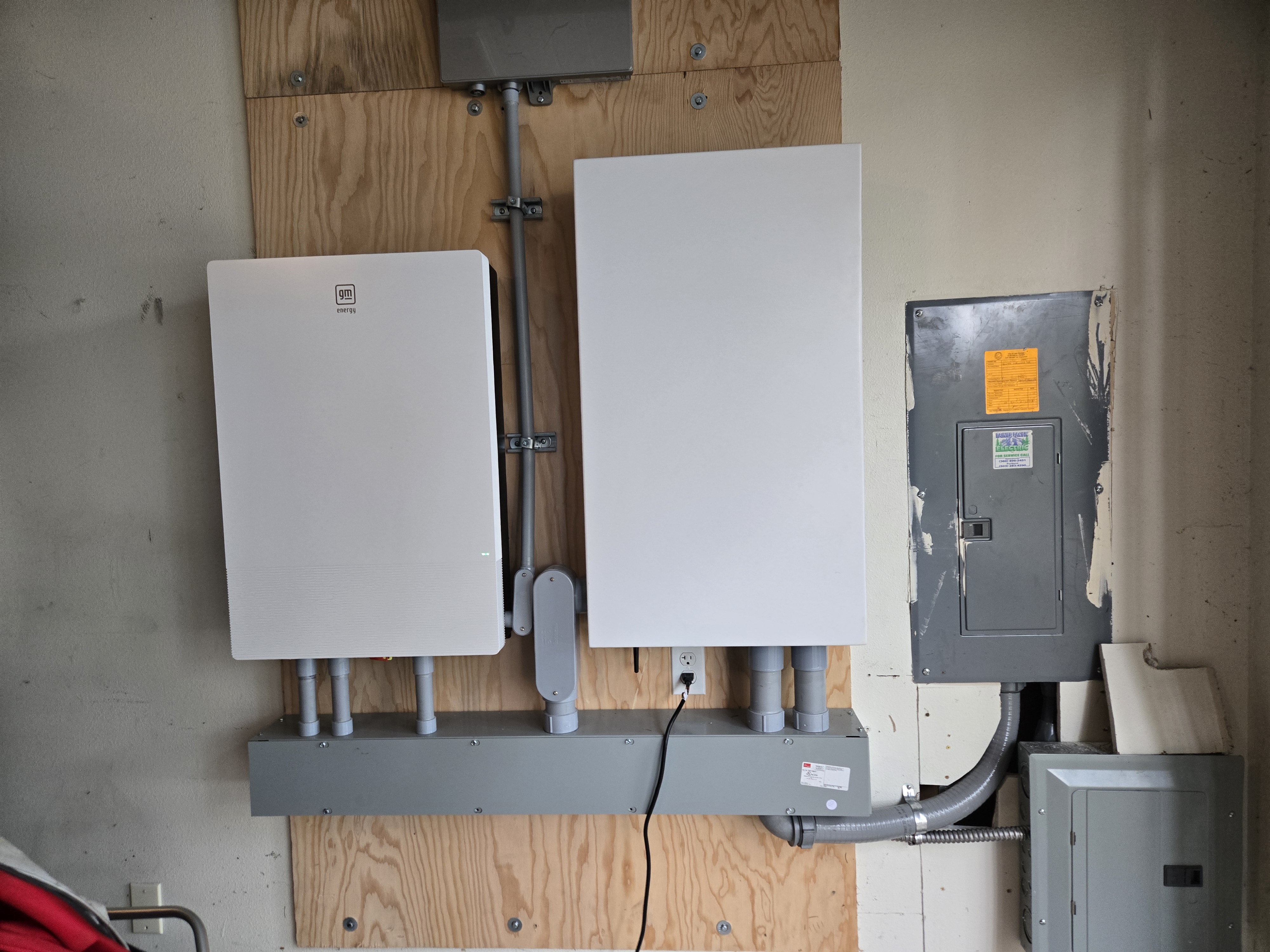
This property in Lake Oswego is equipped with state-of-the-art Vehicle-to-Home (V2H) technology, providing the capacity to run essential household appliances for up to three days using only the energy stored in the electric vehicle’s battery. During prolonged grid outages, residents can maintain indefinite power by “topping off” the vehicle battery at local fast-charge stations before returning to reconnect the vehicle to the home system. As a bonus, the homeowner estimates that he saves $100 per month by using less expensive stored energy from his vehicle battery during peak times.

Home Energy Enhancements
- GM Energy PowerShift Charger: A high-capacity Level 2 charging station capable of managing 19.2kW of bidirectional power transfer between the electric vehicle and the residence.
- Energy V2H Enablement Kit: A sophisticated integration system that bridges the vehicle battery with the home’s main electrical panel, allowing for seamless transition to backup power.
- Bidirectional Resilience: Advanced hardware configuration that enables the electric vehicle to serve as a primary residential energy storage solution.
Current Estimated Costs
- Hardware: $8K
- Professional installation: $5K-$12K
- Total: $13K – $20K
Installation Resources
GM Energy: https://gmenergy.gm.com/vehicle-to-home
Thank you to our Resilient Home & School Tour Sponsors:
Apr 21, 2026 | Community, Electrify LO, Electrify LO Journey
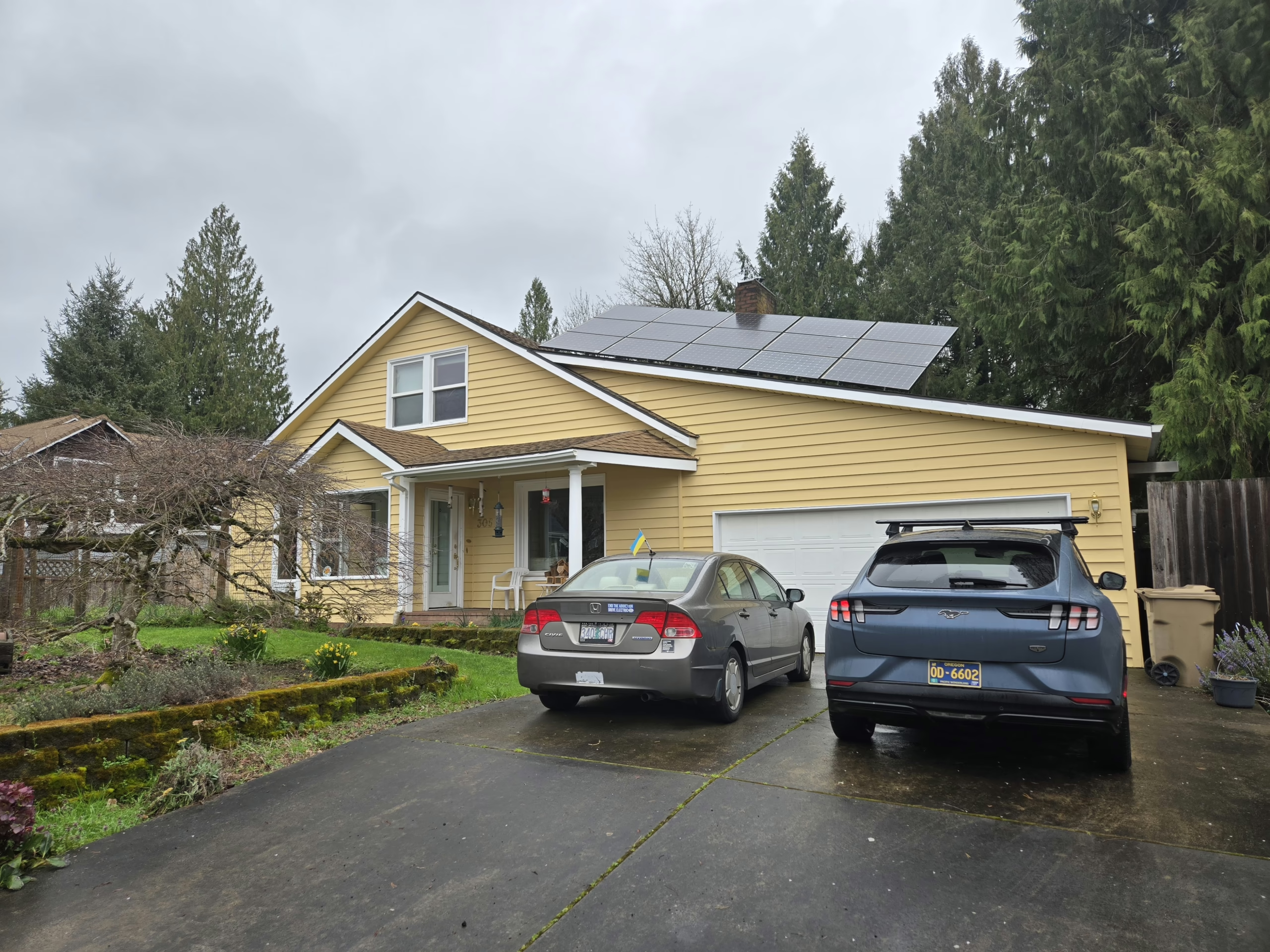
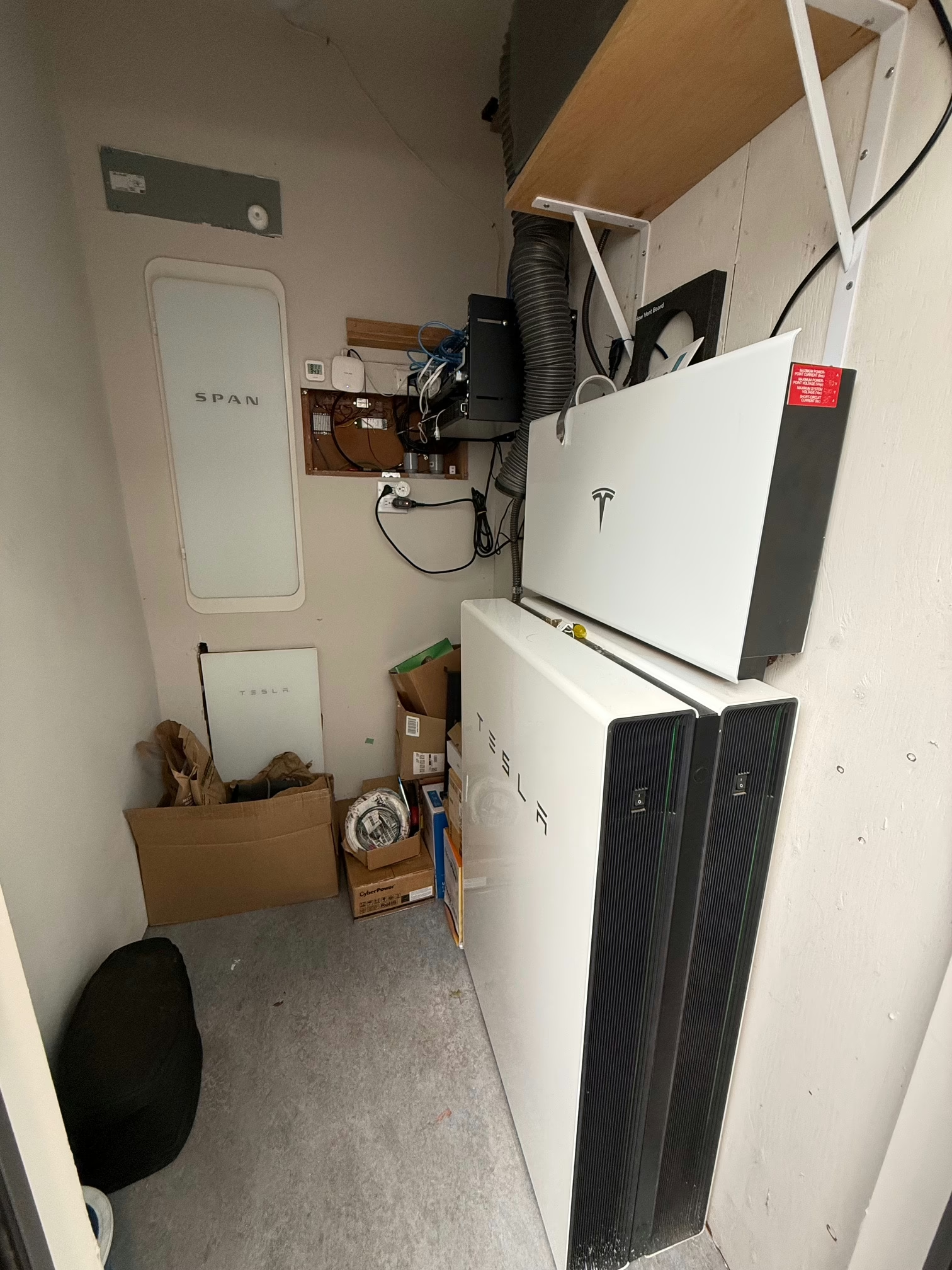
Experience the 12-year journey of the Uplands home in Lake Oswego, a premier example of residential sustainability. This (almost) all-electric residence features solar panels paired with Tesla Powerwall batteries, which have provided uninterrupted power during two major grid outages. The Uplands home utilizes a high-efficiency heat pump, heat pump water heater and induction stove. Supported by two electric vehicles, the owners estimate annual savings of over $2,500.

Home Energy Enhancements
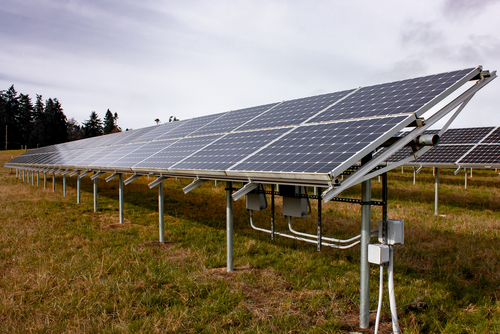
- 26 solar panels
- Two Tesla Powerwall batteries
- 100% Green Power from PGE
- High efficiency heat pump and heat pump water heater
- Induction stove
- Nissan Leaf EV and Acura EV
Environmental Benefits
- Near 100% reduction in greenhouse gas emissions
- Saving approximately 16 tons of CO2e per year
- Equivalent to not burning approximately 1800 gallons of gas
- Equivalent of planting approximately 1016 trees per year
- Uplands carbon footprint is half the U.S. average
Financial Impacts
Costs:
- Solar – $12K after subsidies
- Batteries: $13K
- Average costs for heat pumps, cars and stovetop are equivalent to gas-power equipment
Ongoing savings:
- An average of $2,500 per year
Installation Resources
Thank you to our Resilient Home & School Tour Sponsors:
Apr 21, 2026 | Community, Electrify LO, Electrify LO Journey
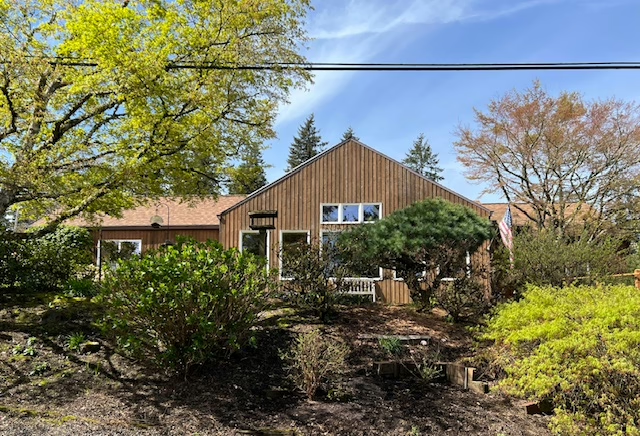
This near Net Zero retrofit home is equipped with a 10 kW solar system, energy efficient appliances, solar hot water, upgraded insulation, electric heat pump, upgraded energy efficient windows, LED lighting and rainwater catchment system. The system saves thousands per year and reduces almost 100% of its net carbon footprint.
Home Energy Enhancements
- 47 solar panels (9.7 kW)
- 3000 gal. rainwater catchment system
- Insulation achieves R32 walls and R45 ceilings
- LifeBreath Heat Recovery Ventilator
- Industrial Mitsubishi Heat Pump
- Solar hot water system
- LED light bulbs
Financial Impact
- Total system costs: $80K
- Added value to home: $65K
- Payback: 7-9 years
Installation Resources
Thank you to our Resilient Home & School Tour Sponsors:
Apr 21, 2026 | Community, Electrify LO, Electrify LO Journey
The Evergreen Home in Lake Oswego demonstrates a reliable deep energy design focused on total electrification and long-term resilience. It features a high-performance building envelope with 24-inch framing, external insulation, efficient windows and precision air sealing to minimize energy loss.
A solar roof supplies roughly 50% of total energy needs. Battery backup supports grid time of use price savings and can power the house for 1-2 days. Inside, the home has a heat pump, ductless ventilation for fresh air, an induction range and a high-efficiency water heater. A solar array and battery, a heat pump and an Energy Recovery Ventilator independently support the 2025 ADU retrofit.

Home Energy Enhancements
- Tesla SolarTile Roof – 10.4 kW capacity
- Two Tesla Powerwall 2 batteries- 27 kWh of storage
- High-efficiency CX34 Hydronic Air-to-Water Monoblock Heat Pump
- LUNOS ductless HRV system for fresh air exchange
- Sanco2 Split CO2 heat pump water heater, smart hot water recirculation
- Professional AGA 48-inch induction range
- 24-inch framing with external insulation and air sealing for a high-performance envelope
Financial Impact
- Main home: $72k with payback in 6 years
- ADU: $40k with payback in 16 years
Installation Resources
Thank you to our Resilient Home & School Tour sponsors:
Jul 24, 2025 | Education, Electrify LO, Electrify LO Journey, In-Person, Online

The roll back for federal support of clean energy signed into law in July 2025 included the end of the 30% tax credit for residential solar and home battery storage systems. If you want to obtain this Residential Clean Energy Credit you will need to have your residential solar and/or battery storage system installed and operational by December 31, 2025. Permits for solar systems take a couple of months to secure and many solar companies are reporting substantial demand. If you want to take advantage of this tax credit ACT NOW.
Get a bid from an Energy Trust of Oregon Allied Contractor through the ETO Solarize Lake Oswego webpage.
Get more information about solar at two free informational events in Lake Oswego.
|
|
|
Tuesday, July 29, 2025
12 – 1 pm
Online
|
|
Tuesday, August 19, 2025
6 – 7 pm
Lake Oswego Public Library
|
|
|
Why add solar to your home?
|
- You add clean energy to the grid.
- Oregon’s goal is to have investor-owned utilities reduce their greenhouse gas emissions by 80% by 2030. In 2024, PGE was only one third of the way to meeting that emission target. When Oregonians add solar they help meet this goal.
- You save money on your energy bills.
- The break-even point is reported between 8-14 years—after that you have paid off your system and your electricity is free. Residential solar systems usually last 25 years.
- Electricity prices continue to rise, so solar purchased now is a hedge against future electricity price increases.
- You add value to your home.
- A recent study showed residential solar increases the value of your home by an average of 6.9%.
- Homes with solar sell faster than those without solar.
- In Oregon, this increased value is exempt from property tax increase.
- If you add a battery system, you will be energy resilient.
- You will ensure that you have electricity during power outages.
|
|
|
Community Solar Works for Me – And Also Surprised Me
|
By Jim Newcomer, LOSN Volunteer
|
I’m a subscriber to community solar power, so I warn you that I’m writing with a bias: I love it. But wait, there’s more: I’m part of an experiment that could increase our nation’s vegetable supply. What?
First, here’s my experience with the program. About two years ago my wife and I, who rent our home, wanted to access electricity that was procured from clean, renewable sources that would produce few greenhouse gas emissions – that is, not from coal or natural gas. Since we could not erect solar panels on our landlord’s roof, we signed up for Community Solar Power through the Oregon Community Solar Project.
At first we were disappointed – all their available solar farms were fully subscribed, and we were put on a waiting list. After a couple of months, though, a new project opened near us, and they accepted us as a subscriber. Immediately we began to receive electricity from it…
|
|
|
Consult a coach from Electrify Oregon
|
|
|
Other federal tax incentives for clean energy for your home are going away soon. EV tax credits will expire on September 30. Home energy tax credits for heat pumps for heating and cooling your home and your hot water heater will end December 31, 2025. If you want to get some help figuring out how to bring clean energy into your home, find contractors, and get tax breaks and financial incentives, consider a free session with a coach from the nonprofit Electrify Oregon. LOSN is an allied organization of Electrify Oregon and several of the coaches live in Lake Oswego.
|
|
|
Jul 22, 2025 | Electrify LO, Electrify LO Journey

The roll back for federal support of clean energy signed into law in July 2025 included the end of the 30% tax credit for residential solar and home battery storage systems. If you want to obtain this Residential Clean Energy Credit you will need to have your residential solar and/or battery storage system installed and operational by December 31, 2025. Permits for solar systems take a couple of months to secure and many solar companies are reporting substantial demand. If you want to take advantage of this tax credit ACT NOW.
Get a bid from an Energy Trust of Oregon Allied Contractor through the ETO Solarize Lake Oswego webpage.
Why add solar to your home?
- You add clean energy to the grid.
- Oregon’s goal is to have investor-owned utilities reduce their greenhouse gas emissions by 80% by 2030. In 2024, PGE was only one third of the way to
meeting that emission target. When Oregonians add solar they help meet this goal.
- You save money on your energy bills.
- The break-even point is reported between 8-14 years—after that you have paid off your system and your electricity is free. Residential solar systems usually last 25 years.
- Electricity prices continue to rise, so solar purchased now is a hedge against future electricity price increases.
- You add value to your home.
- A recent study showed residential solar increases the value of your home by an average of 6.9%.
- Homes with solar sell faster than those without solar.
- In Oregon, this increased value is exempt from property tax increase.
- If you add a battery system, you will be energy resilient.
- You will ensure that you have electricity during power outages.
- Your house is a primary or secondary home, not a home you are renting.
- Your roof planes face south, east or west.
- Your roof does not have substantial shade.
- Obstruction by shade can be determined by satellite imagery.
- More refined analysis can be completed by your contractor.
- Your roof is in good condition and has at least 10 years of roof life.
What are the financial advantages of solar?
The federal tax credit is 30%.
- It is only valuable to homeowners who pay federal taxes.
- Make sure you have enough tax liability to take advantage of this tax credit.
- At this time, some tax liability can be carried forward to future years.
- Example: For a system that costs $30,000, the federal tax credit would be $9,000.
Energy Trust of Oregon offers additional rebates. These rebates will continue beyond the federal cut-off. For residents in Lake Oswego, they include:
Financing
- Financing of systems is common.
- Installers may offer financial plans.
- Credit unions may have loans tailored to solar.
- In the summer, during the day you will generate more electricity than you can use. This electricity will flow back into the grid. PGE will give you credit for this electricity.
- During the winter, when you are not generating enough electricity, PGE will supply you with electricity and you will pay the bill using the credits you’ve accrued from PGE in summer.
- This is called “net metering”.
- These credits roll over from month to month through the year, but not from year to year.
- If you have not used your credits by March 31, they are donated to low-income subscribers or nonprofits.
- When you purchase your system, your contractor will size your system based on your past use by looking at your PGE bills so that your net-metering credits fit your usage.
When you request a bid through the ETO Solarize Lake Oswego Website, installers will be clear with you if they can complete the work by December 31 so that you will be eligible for the 30% federal tax credit.